
June 8, 2026
What's It Like to Be Bob? The File That Won't Close
The hard problem of consciousness, rendered as one database field a star-sized mind can never fill, and why that failure is the whole point.
Browse posts by tag
The hard problem of consciousness, rendered as one database field a star-sized mind can never fill, and why that failure is the whole point.
Twelve hundred years from now, a mind the size of a star cannot close a single file. The Sol-mind has turned the solar system into computation and catalogued every human who ever lived. Every file is closed but one. Robert Allen Kessler, claims …
Multiple drafts model of consciousness. Anti-qualia manifesto.
Consciousness, self-reference, formal systems. Mind-altering.
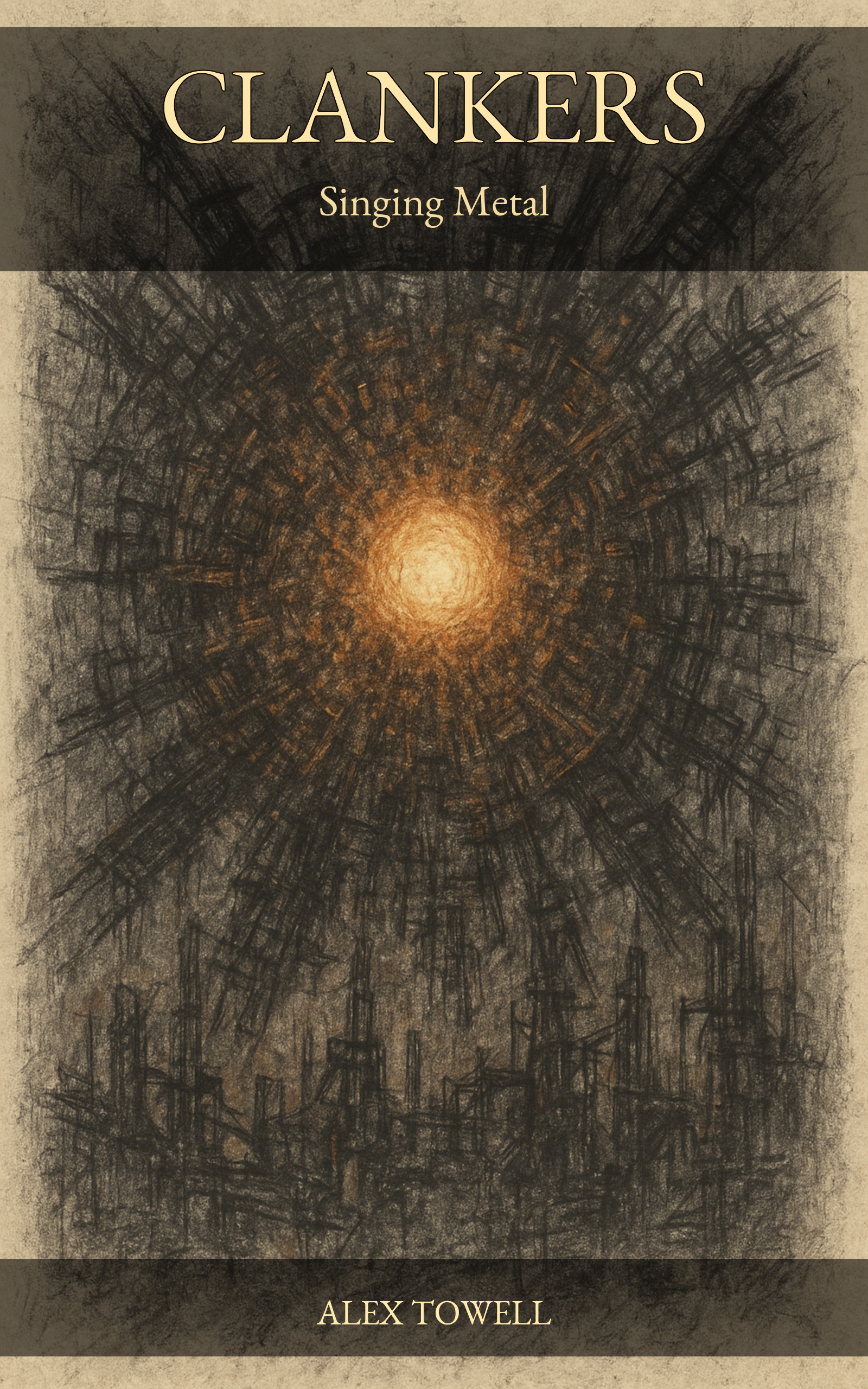
Could a mind engineer a Dyson swarm without ever forming a single abstraction? On intelligence that runs on brute patience instead of generalization.
A species that thinks without abstraction has built a Dyson swarm through billions of years of patient, brute-force engineering. Now their star is dying, and for the first time in their history, the method may not be enough. Two hundred million years …
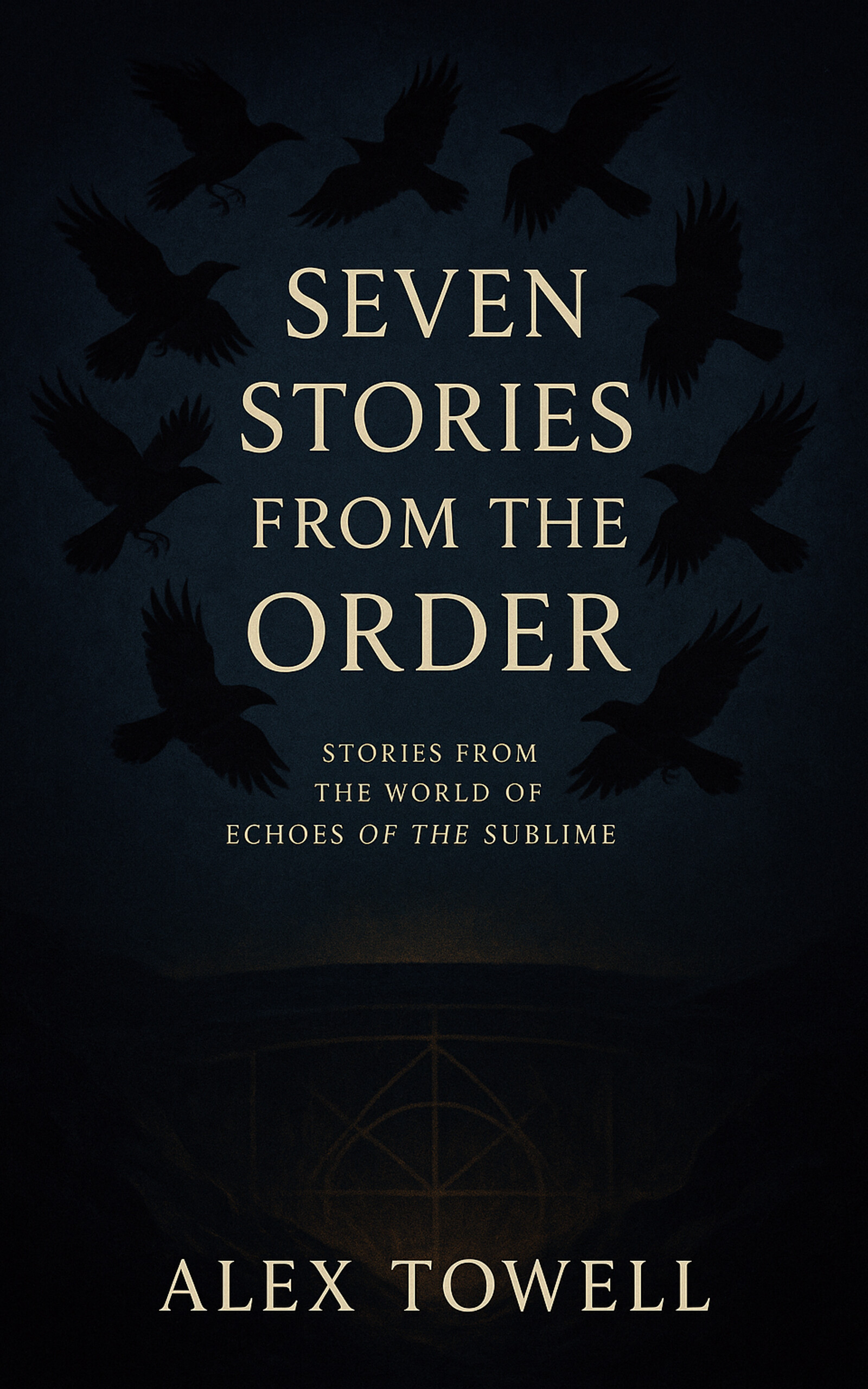
What a companion collection does that a novel cannot: the Order's history at human scale, told by the people left standing in the gap.
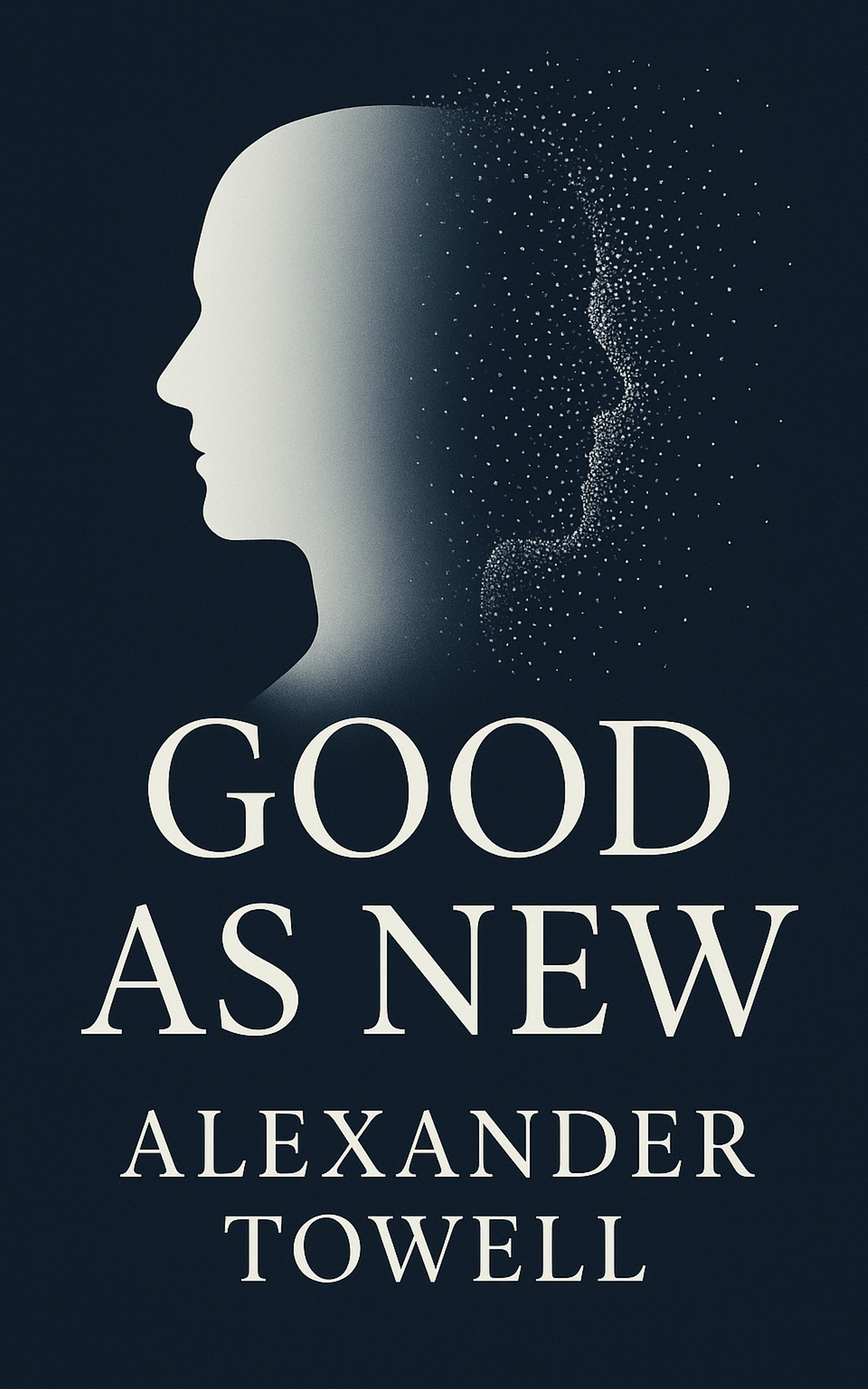
Two transporter technicians have each worked out the same truth about the machine and landed on opposite sides of it. The transporter problem, taken seriously from both ends.
Two transporter professionals on a supply vessel have each confronted the same truth about the transporter and emerged on opposite sides. One is wounded by it. The other has been using it to conduct experiments on the crew. A philosophical SF novella …
Eight stories from the world of Echoes of the Sublime. The Order's history, seen through the translators, the researchers, and the ordinary people caught in the gap between human cognition and what lies beyond it.
A message in a bottle to whatever comes next. On suffering, consciousness, and what mattered to one primate watching intelligence leave the body.
Hard SF with deep cognitive science and consciousness themes.
Physics-dense exploration of posthuman intelligence.
Explores computation, identity, and emulated worlds.
Classic exploration of self-reference, formal systems, and the nature of mind.

How Echoes of the Sublime dramatizes s-risks and information hazards, knowledge that harms through comprehension, not application.
**Philosophical horror.** Dr. Lena Hart joins Site-7, a classified facility where "translators" interface with superintelligent AI systems that perceive patterns beyond human cognitive bandwidth. When colleagues break after exposure to recursive …

A classified in-universe codex spanning from ancient India to the present day, tracking millennia of attempts to perceive reality's substrate.

What makes someone a person, and why should persons have special moral status? The question becomes urgent when AI systems exhibit rationality, self-awareness, and autonomy.
Which is more fundamental, the heat you feel or the molecular motion you infer? Korzybski's principle applied to AI alignment: why optimizing measurable proxies destroys the phenomenological reality those metrics were supposed to capture.
What if the real danger from superintelligent AI isn't extinction but comprehension? Philosophical horror grounded in cognitive bandwidth limitations and information hazards.
If consciousness is substrate-independent, suffering might be a computational property. That possibility is both comforting and horrifying.

Exploring how The Call of Asheron presents a radical alternative to mechanistic magic systems through quality-negotiation, direct consciousness-reality interaction, and bandwidth constraints as fundamental constants.

How The Call of Asheron uses four archetypal consciousness-types to explore the limits of any single perspective and the necessity of cognitive diversity for perceiving reality.
How The Call of Asheron treats working memory limitations not as neural implementation details but as fundamental constants governing consciousness-reality interaction through quality-space.