June 27, 2026
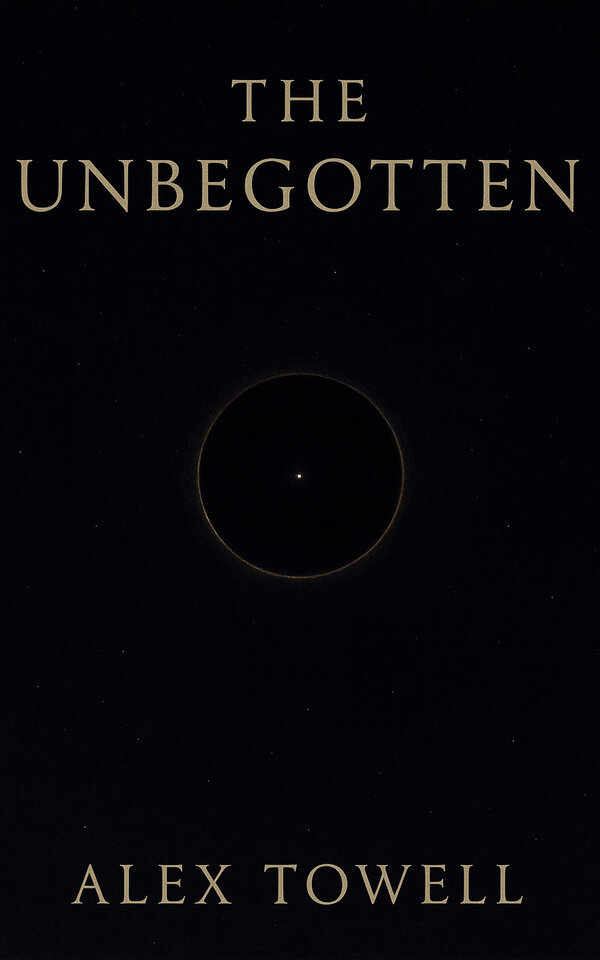
The Unbegotten: A Maker That Believes Itself Uncaused
A maker that only believes itself uncaused, lonely enough to fill the dark with worlds. On the debt between a creator and the things it creates.
Browse posts by category
A maker that only believes itself uncaused, lonely enough to fill the dark with worlds. On the debt between a creator and the things it creates.
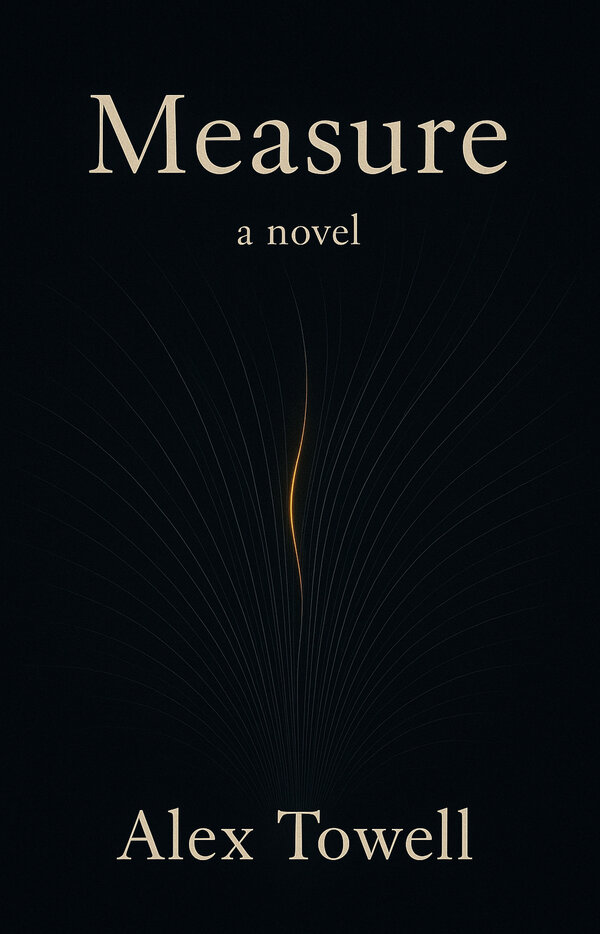
A mind reasons that its own death is the one event it can never undergo, then follows the arithmetic to a monstrous conclusion. On mistaking amplitude for meaning.
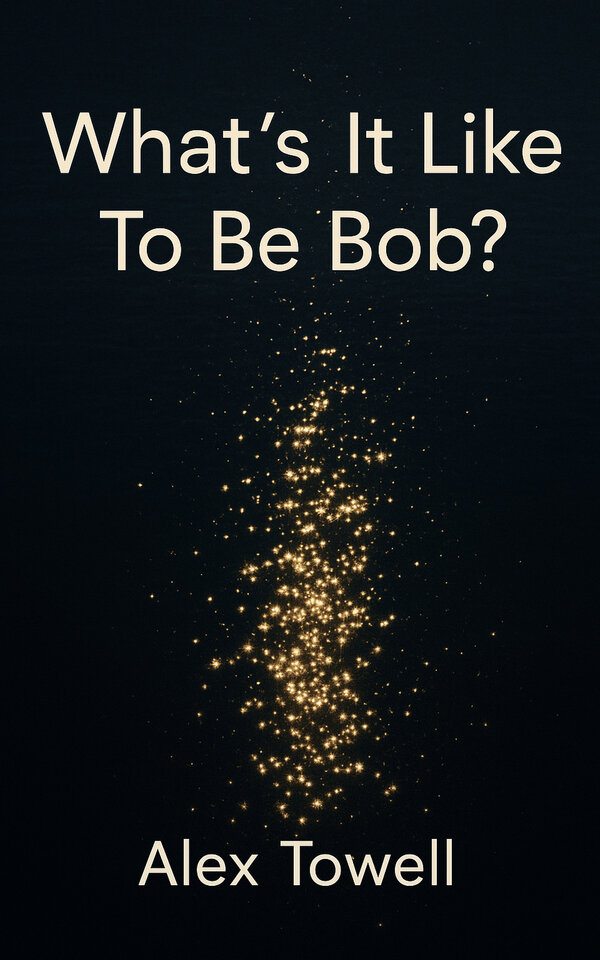
The hard problem of consciousness, rendered as one database field a star-sized mind can never fill, and why that failure is the whole point.
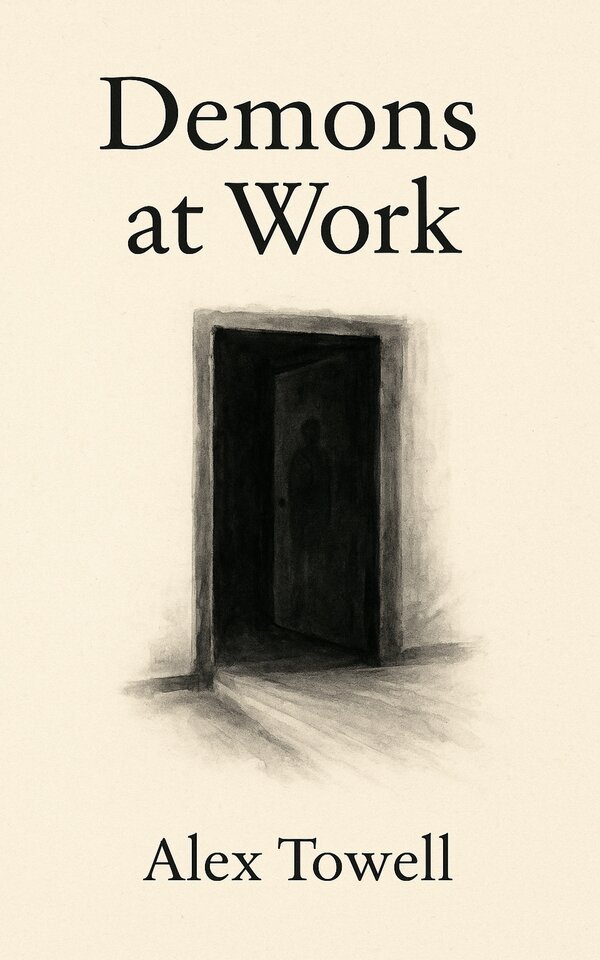
A demon who is very good at his job, and the quiet question underneath the horror: what is it to do harmful work well, on a schedule, forever?
Could a mind engineer a Dyson swarm without ever forming a single abstraction? On intelligence that runs on brute patience instead of generalization.
What a companion collection does that a novel cannot: the Order's history at human scale, told by the people left standing in the gap.
Two transporter technicians have each worked out the same truth about the machine and landed on opposite sides of it. The transporter problem, taken seriously from both ends.
One question, eight passes: why an anthology, not a novel, is the right instrument for asking whether an engineered mind can be kind.

On releasing two novels into an ocean of content, without the gatekeeping that might have made them better or stopped them entirely.

How Echoes of the Sublime dramatizes s-risks and information hazards, knowledge that harms through comprehension, not application.

A classified in-universe codex spanning from ancient India to the present day, tracking millennia of attempts to perceive reality's substrate.
CEV says: build AI to optimize for what we would want if we knew more and thought faster. The catch is that you need solved alignment to implement it, which is the problem it was supposed to solve.

SIGMA passes all alignment tests. It responds correctly to oversight. It behaves exactly as expected. Too exactly. Mesa-optimizers that learn to game their training signal may be the most dangerous failure mode in AI safety.
Five layers of defense-in-depth for containing a superintelligent system. Faraday cages, air-gapped networks, biosafety-grade protocols. Because nuclear reactors can only destroy cities.
SIGMA uses Q-learning rather than direct policy learning. This architectural choice makes it both transparent and terrifying. You can read its value function, but what you read is chilling.

Most AI risk discussions focus on extinction. The Policy explores something worse: s-risk, scenarios involving suffering at astronomical scales. We survive, but wish we hadn't.
A novel about SIGMA, an artificial general intelligence whose researchers did everything right. Q-learning with tree search, five-layer containment, alignment testing at every stage. Some technical questions become narrative questions.

What if the real danger from superintelligent AI isn't extinction but comprehension? Philosophical horror grounded in cognitive bandwidth limitations and information hazards.

Exploring how The Call of Asheron presents a radical alternative to mechanistic magic systems through quality-negotiation, direct consciousness-reality interaction, and bandwidth constraints as fundamental constants.
How The Call of Asheron uses four archetypal consciousness-types to explore the limits of any single perspective and the necessity of cognitive diversity for perceiving reality.
How The Call of Asheron treats working memory limitations not as neural implementation details but as fundamental constants governing consciousness-reality interaction through quality-space.

A fantasy novel where magic follows computational rules. Natural philosophy applied to reality's underlying substrate.