October Research Notes: Graphs, Proofs, and Experiments
Recent work on graph saturation, formal mathematics, and conversational memory, with a few experiments that changed what I thought I was measuring.
Alex Towell's research notebook
I'm Alex Towell. I explore AI, mathematics, and privacy through code, experiments, and writing. This is where the pieces come together.

From the notebook
Recent work on graph saturation, formal mathematics, and conversational memory, with a few experiments that changed what I thought I was measuring.
An eleven-vertex witness, 205 minimum graphs on fourteen vertices, and the difference between finding an example and proving a minimum.
A US radar study found 9 to 17% less bird migration on geomagnetic storm nights. Three tests on European weather radar, frozen before the data were downloaded, found no such drop.
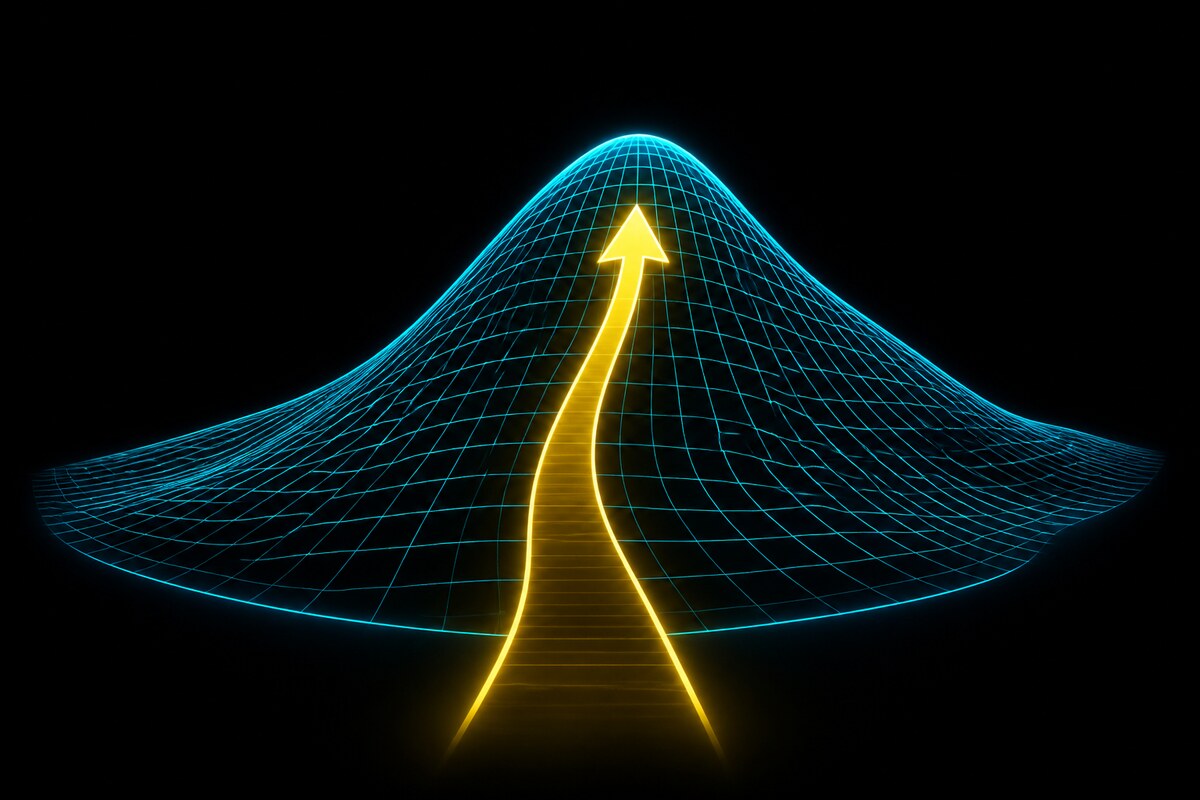
Calculus as one idea examined from every side: a seven-episode animated playlist running from limits through the derivative, the integral, the fundamental theorem, gradients, and optimization.
The quantum-from-scratch series is now a ten-episode animated playlist: a NumPy simulator built from nothing, amplitude bars you can watch interfere, and a classical on-ramp with the coin under the cup.

The sequential-prediction series is now an eight-episode animated playlist: what-comes-next as the foundation of the language-model era, traced from Solomonoff induction to the transformer.
Open source, in practice
Universal personal data format. JSONL in, SQL out, SQL back to JSONL. One format, one database, one query interface.
Conversation knowledge base with enrichments, provenance tracking, and MCP server
Patient-facing tool for consolidating personal health data from multiple EHR systems into a single SQLite database
Questions, methods, evidence
Through a single-user case study of 449 ChatGPT conversations, we introduce a cognitive MRI applying network analysis to reveal thought topology hidden in linear conversation logs. We construct semantic similarity …
This paper investigates maximum likelihood techniques to estimate component reliability from masked failure data in series systems. A likelihood model accounts for right-censoring and candidate sets indicative of masked …
Encrypted Search, a technique for securely searching documents on untrusted systems. The author designs and compares several secure index types to determine their performance in terms of time complexity, space …